Every animal we admit gets a case number, a treatment plan, and,
after release, six weeks of trail-camera checks. These are some of
the files we open most often when people ask what we actually do.
2025 and 2026
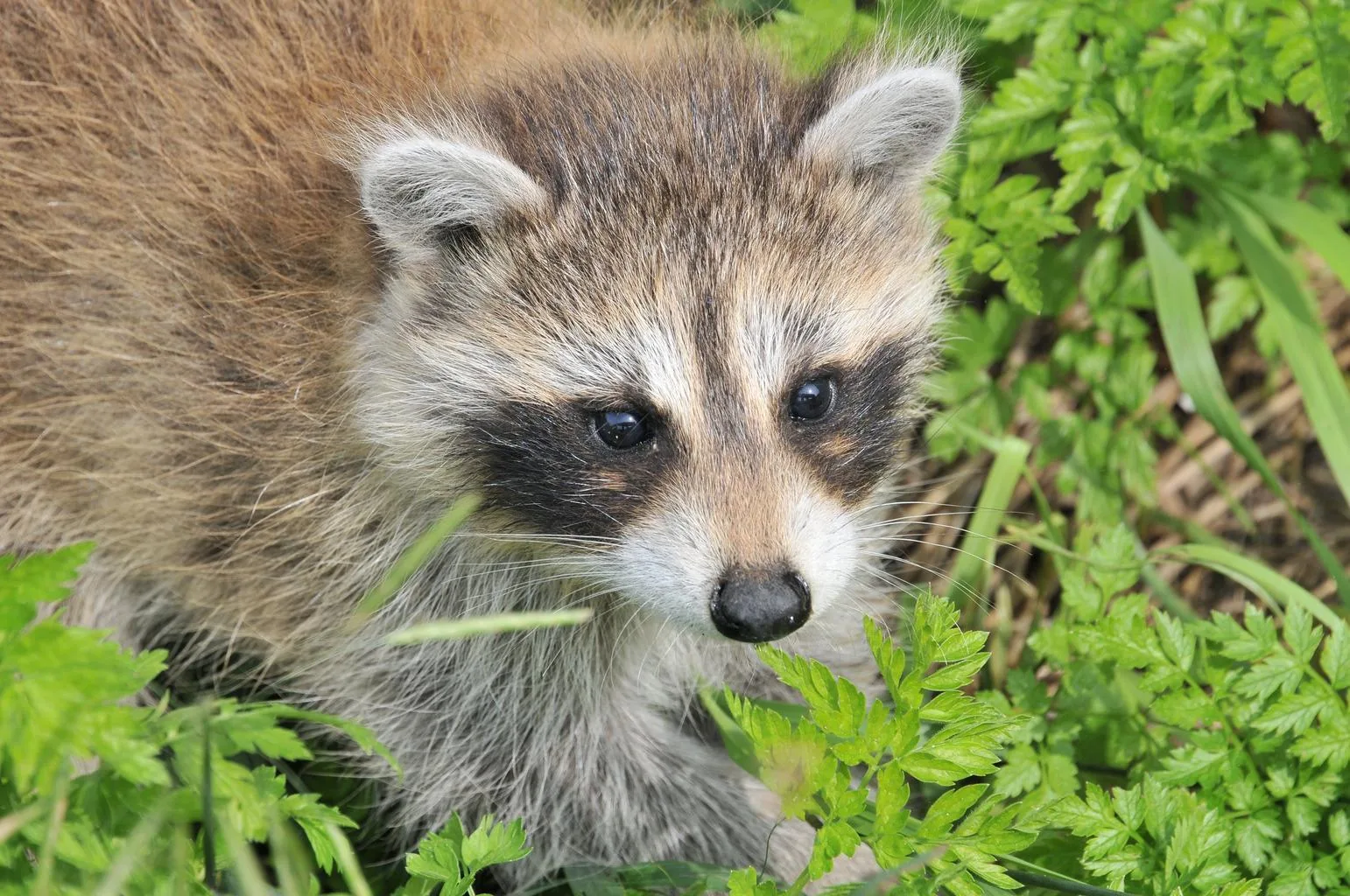
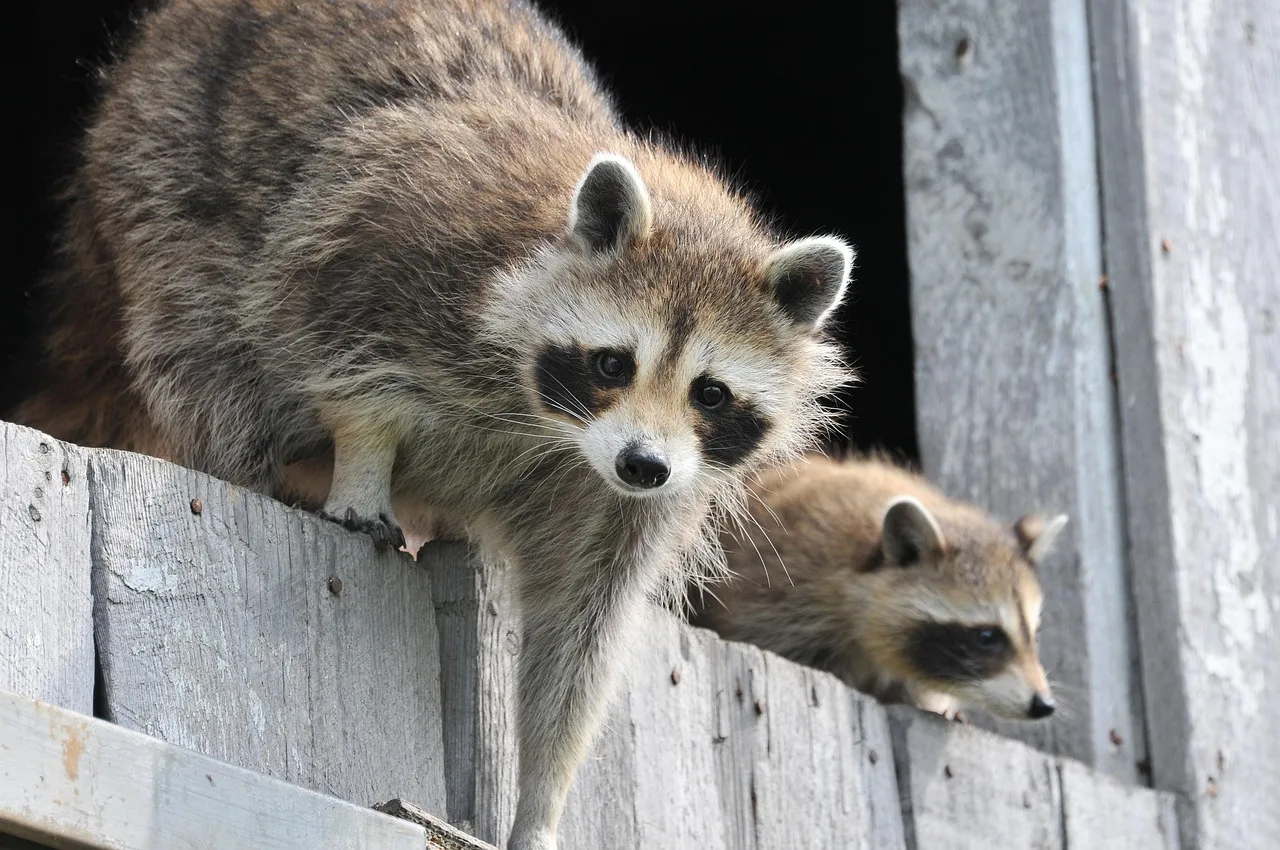
Pip tucked against Hazel's flank in the hedge behind the Ferreira house, two days after the reunion. May 2026.
May 2026, Riverbend
Hazel and Pip: reunited, not rescued
On the evening of May 11 the Ferreira family heard chirping in
their chimney. Devon Hale arrived to find a kit about four weeks
old, cold but uninjured, on the damper. Our first question with a
healthy kit is never "how do we take it in." It is "where is the
mother."
We warmed Pip in the truck, then placed him in a ventilated box
at the base of the chimney with a hot-water bottle and a
radio playing quietly. The family kept the lights off. At 2:40
a.m. the camera caught Hazel, a female we had never met, carrying
him across the deck and into the hedge.
Outcome: reunited with mother within eight hours. No admission, no clinic time, no habituation to people.
Response time1 hour 50 minutes
Time to reunion8 hours
Reunions in 2026 so far27 kits
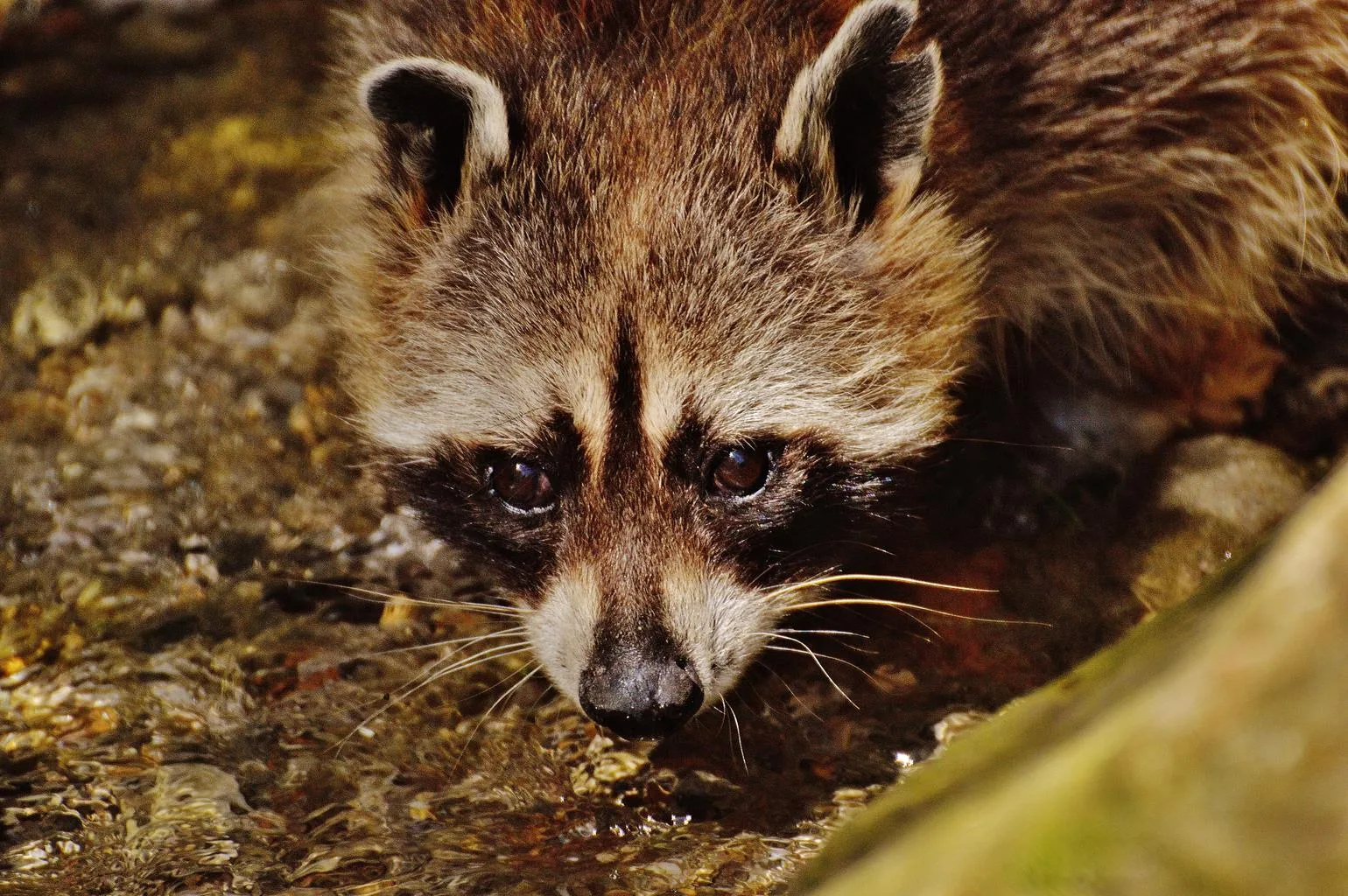
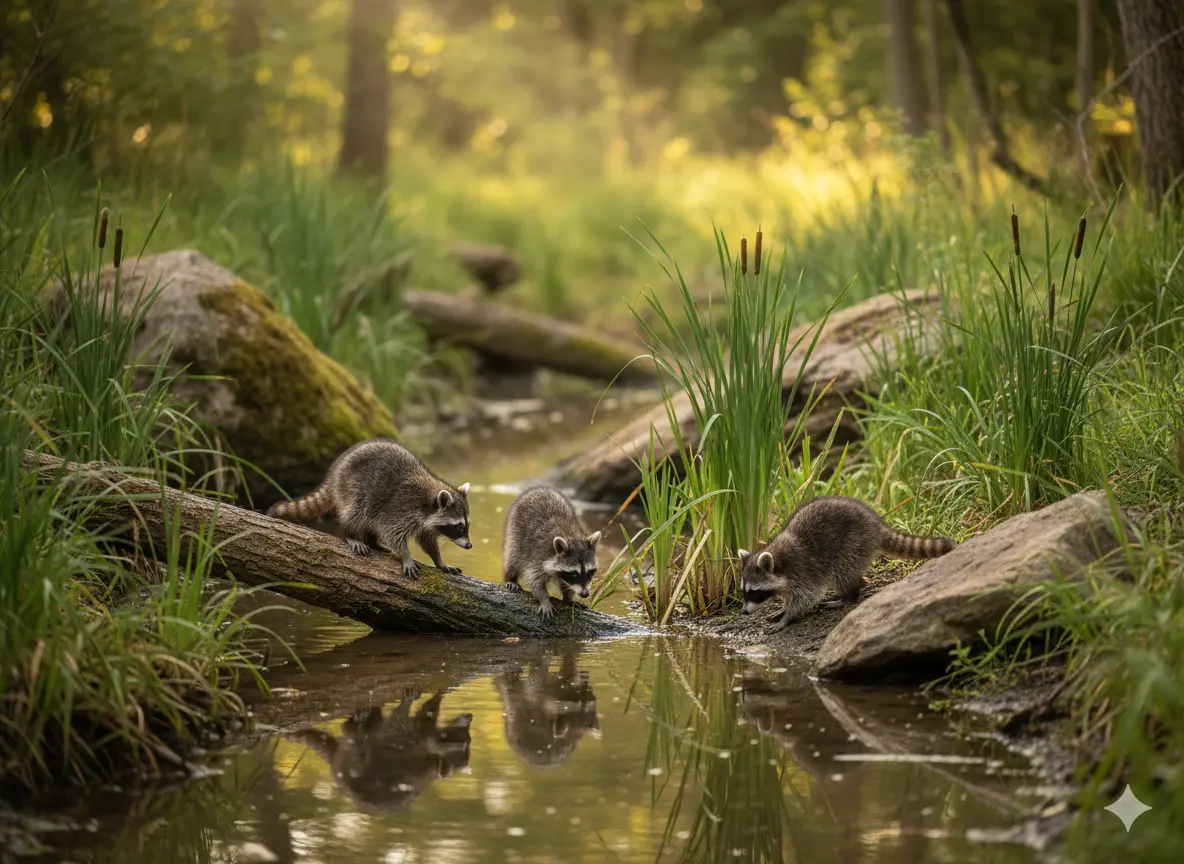
Bramble drinking at the Mossy Creek boat ramp a week after release. August 2025.
August 2025, Mossy Creek
Bramble and the fishing line
An angler called the hotline about a large male raccoon dragging
his left foreleg near the Mossy Creek boat ramp. Monofilament
had wrapped the leg above the wrist and cut through the skin.
He was thin, dehydrated, and very unhappy about being caught.
Dr. Ortega removed the line under light sedation and debrided the
wound. Bramble spent eleven days in a low-stress enclosure with
a course of antibiotics, daily wound checks, and a climbing
frame to test the leg. He was released on August 23 within a
hundred yards of the ramp, which we had spent the morning
clearing of discarded line.
Outcome: full release. Camera checks at two, four, and six weeks showed normal gait and climbing.
Response time3 hours 10 minutes
Days in care11
Weight gain in care1.4 lb
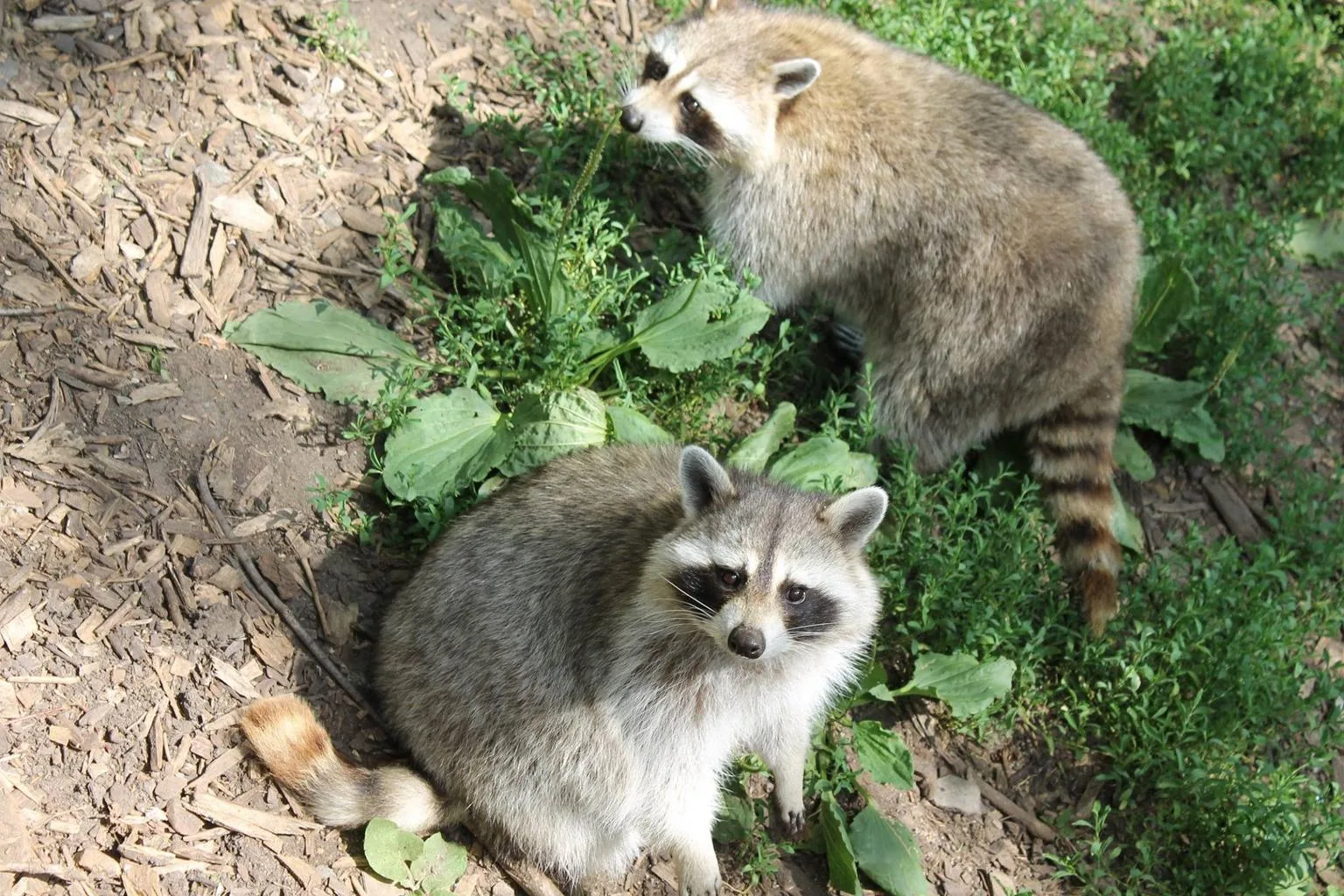
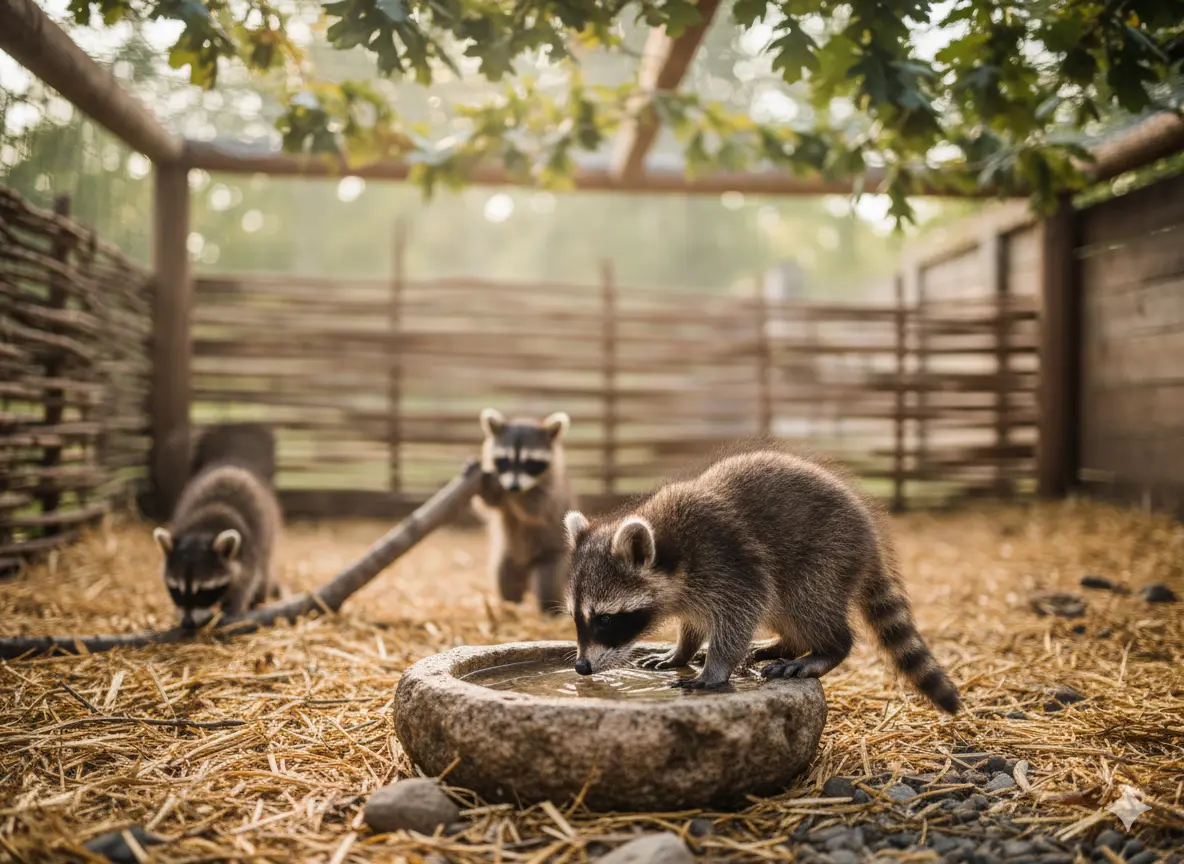
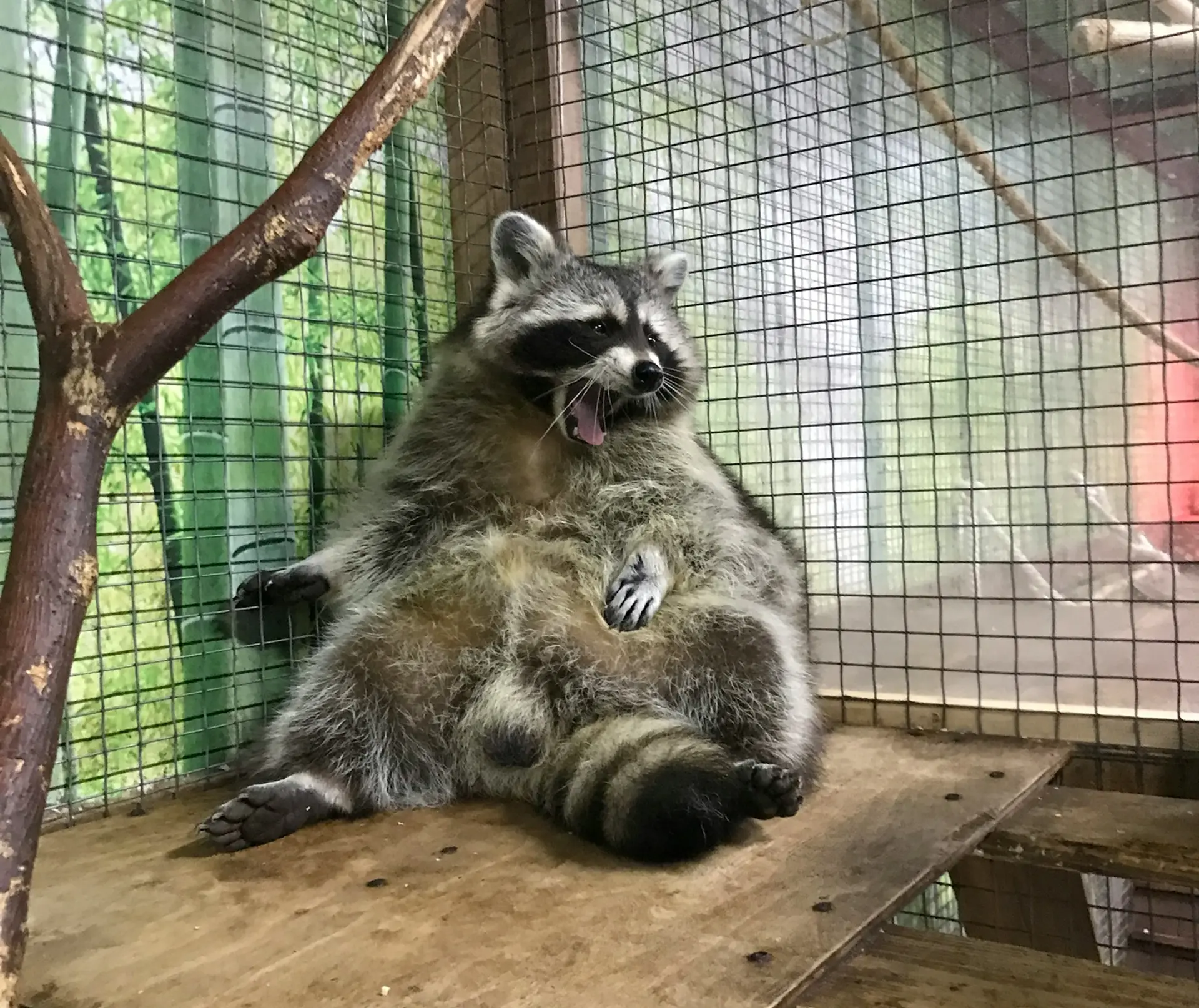
Two of the Cedar Four in the pre-release enclosure, October 2025.
September to November 2025, campus
The Cedar Four
Four orphaned juveniles arrived within nine days of each other
from three separate calls: two from a roadside den after their
mother was killed, one from a barn demolition in Alder, one found
alone under a cedar deck. None was old enough to forage.
Raccoons learn from each other, so we raised them as a cohort in
one of the large enclosures. Volunteers built puzzle feeders,
shallow water trays, and a climbing wall. By late October the
four were opening feeders, washing food, and denning together.
They were released as a group at Alder Flats on November 8.
Outcome: group release. Cameras recorded all four using the same den tree through December.
Age at intake10 to 14 weeks
Days in care52
Cost of care$3,900 for four
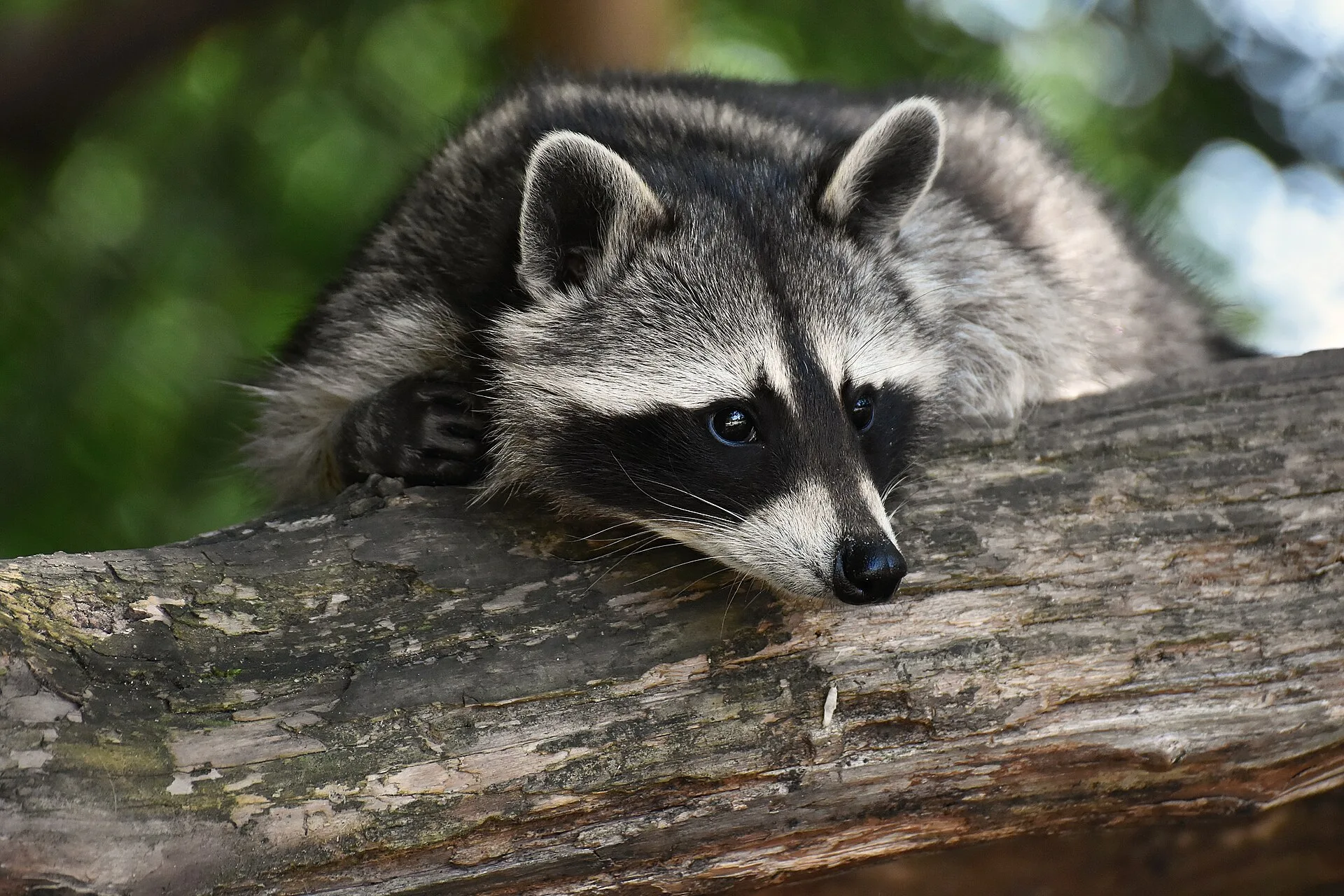
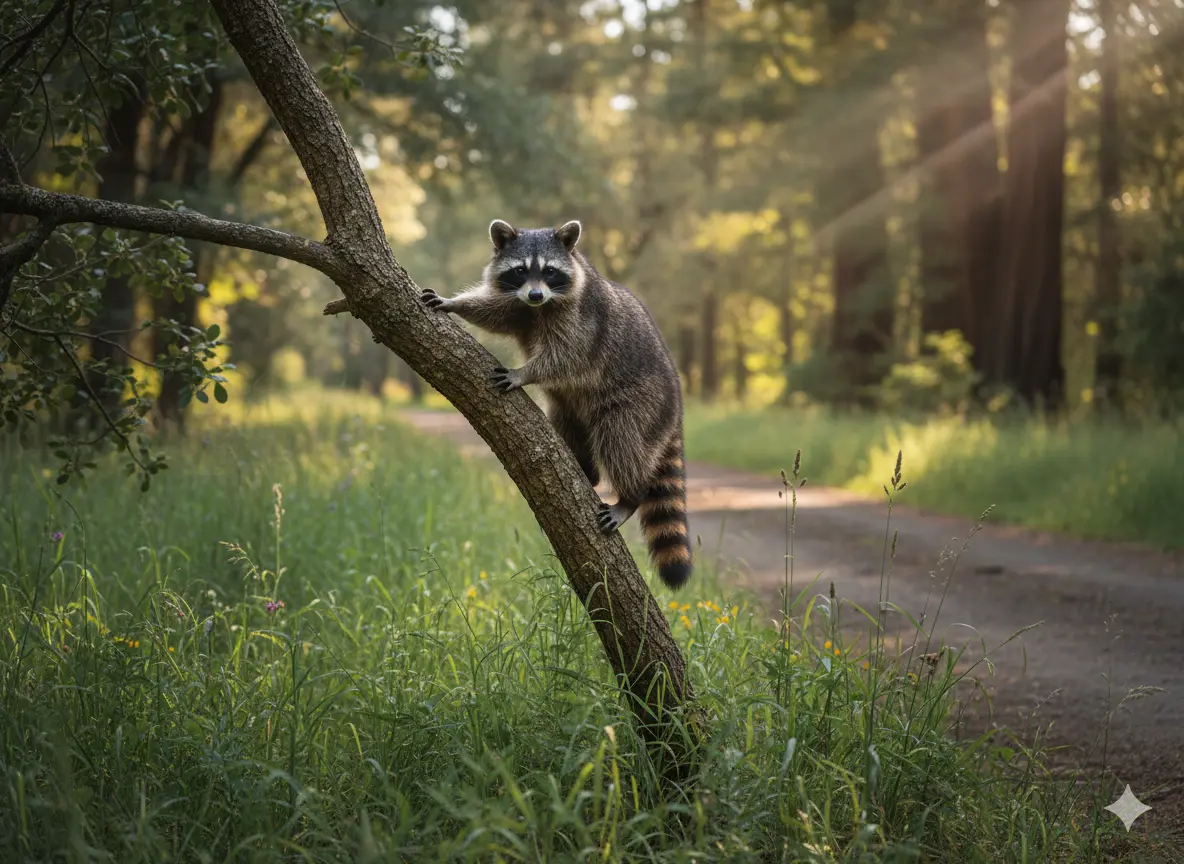
Sable resting on a fallen log at Alder Flats, six weeks after release. October 2025.
August to September 2025, Alder Flats
Sable's fracture
Sable, an older female, was found at the edge of Alder Flats
unable to bear weight on a hind leg. Before the clinic wing,
imaging meant a 40-minute drive to Mossy Creek Veterinary
Hospital. The X-ray showed a clean tibial fracture.
A splint, crate rest, and four weeks of steadily longer climbing
sessions brought the leg back. She was released at Alder Flats on
September 12. Her case was one of the examples we used when we
asked donors to fund imaging on campus.
Outcome: full release. Now one of the resident females cameras record most often at Alder Flats.
Days in care34
Imaging trips3, off site
Post-release checks6 weeks
From 2024
The year of the Riverbend fire. Five of the 126 raccoons we admitted.