
Found a raccoon?
Call (000) 000-0000. A dispatcher answers 24 hours a day, every day. While you wait, or if you are not sure the animal needs help, this page tells you what to do.
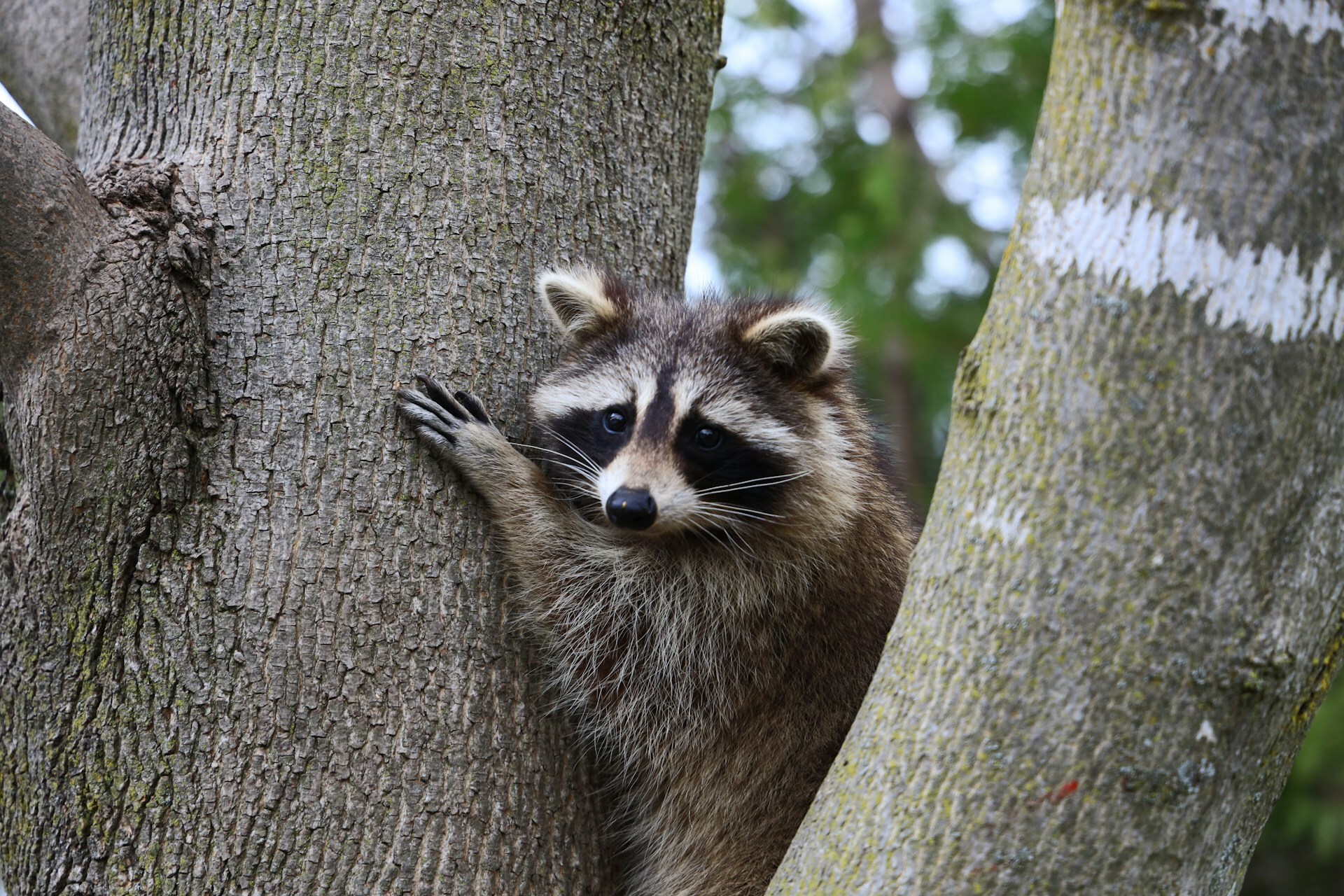
If the raccoon is injured or in danger
Bleeding, limping, hit by a car, tangled in netting, stuck somewhere it cannot get out of, or being attacked by a pet.
-
Keep your distance and keep others back
An injured raccoon is frightened and will bite. Move children and pets indoors. Do not try to pick it up or corner it.
-
Call (000) 000-0000
Tell the dispatcher where you are, what you can see, and whether the animal can move. If it is on a road, say so first. We will tell you whether a responder is coming and how long it will take.
-
Contain it only if the dispatcher asks you to
Sometimes we will ask you to place an upturned laundry basket or box over a small or immobile animal to keep it from crawling somewhere we cannot reach. Wear thick gloves. Never use bare hands.
-
Do not feed it or give it water
Food and water can make injuries worse and make treatment harder. Warmth, dark, and quiet are the only things that help.
-
Stay nearby until we arrive
A responder will call you when they are close. Median time from call to pickup this year is 15 hours, but urgent calls on roads and in traffic are prioritized and usually reached in under two.
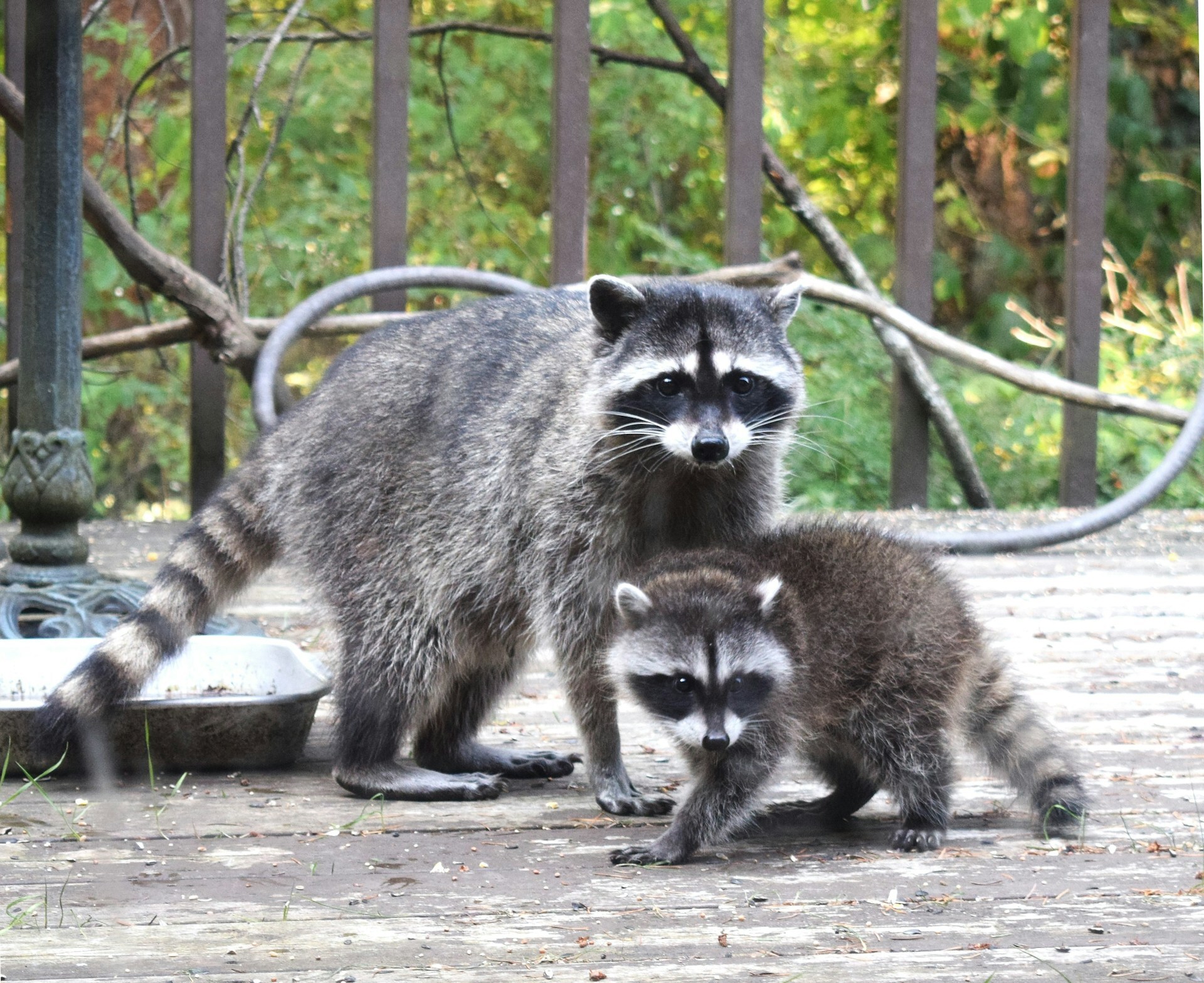
If you have found a kit
Between April and August, most kits found alone are not orphans. Their mother is foraging or moving the litter and will come back for them. A kit raised by its mother does far better than one raised by us, so our first goal is always a reunion.
- Warm, dry, quiet, uninjured
Leave it, or put it in an open box at the base of the nearest tree. Keep pets in. Watch from a window after dark. Call us in the morning if she has not come.
- Cold, crying for hours, eyes closed, flies, or injured
Call us now. Box it with a towel somewhere warm and dark. No food, no water.
- You know the mother is dead
Call us. We will collect the kit and check the area for littermates.
In 2026 so far, 27 kits have gone home with their mothers this way. Read how a reunion works.
Common questions
There is a raccoon in my attic, chimney, or under my deck. Is that an emergency?
Usually not. Between March and August it is most likely a female with kits, and the humane fix is to wait a few weeks until they leave on their own, then seal the entry. Call the hotline during office hours and we will talk you through it, or email hello@foggyvalleyrescue.org for our coexistence toolkit. We do not trap and relocate healthy raccoons; it separates families and is illegal in Oregon without a permit.
A raccoon is out in the daytime. Does it have rabies?
Almost never. Nursing mothers forage by day, and juveniles in autumn have not learned the schedule yet. Rabies in raccoons is extremely rare in Oregon. Signs of illness we do want to hear about: staggering, circling, discharge from eyes or nose, or approaching people without fear. Call us and keep pets inside.
Can I bring the raccoon to you myself?
If it is already safely contained in a box or crate, yes: the campus at 1287 Mossy Creek Road accepts animals from 7 a.m. to 9 p.m. Call ahead so someone meets you at the intake door. Please do not attempt to catch a mobile raccoon yourself.
I found a dead raccoon. Who do I call?
On a county road, the county road department. On your property, it can go in household waste in a sealed bag, wearing gloves. If you find several dead raccoons in one area, please tell us; that can be an early sign of distemper and we pass it to the state wildlife department.
Do you take other animals?
No. We are permitted for raccoons only. For other wildlife, the dispatcher will give you the number of the nearest general center, usually Cascadia Wildlife Care in Eugene. For domestic animals, call Lane County Animal Services.
What happens to the raccoon after you collect it?
It is examined within an hour of arriving, given a case number, and placed on a treatment plan. Most animals spend two to eight weeks with us before release, usually into one of our three protected habitat corridors, followed by six weeks of trail-camera monitoring. If you give the dispatcher your email, we will send you a short update when the animal is released. In 2025, 94% of the animals we admitted made it back to the wild.
Every rescue starts with a phone call
Keeping two dispatchers on the line through dispersal season is what the Winter Den Fund pays for.